
Black Lives Matter

CTData stands in solidarity with Black Lives Matter. We condemn police violence and racism.

For more than 400 years, Black lives have been lost at the hands of slave owners, police, or armed vigilantes. Racism is a virus, and it is killing Black people. 
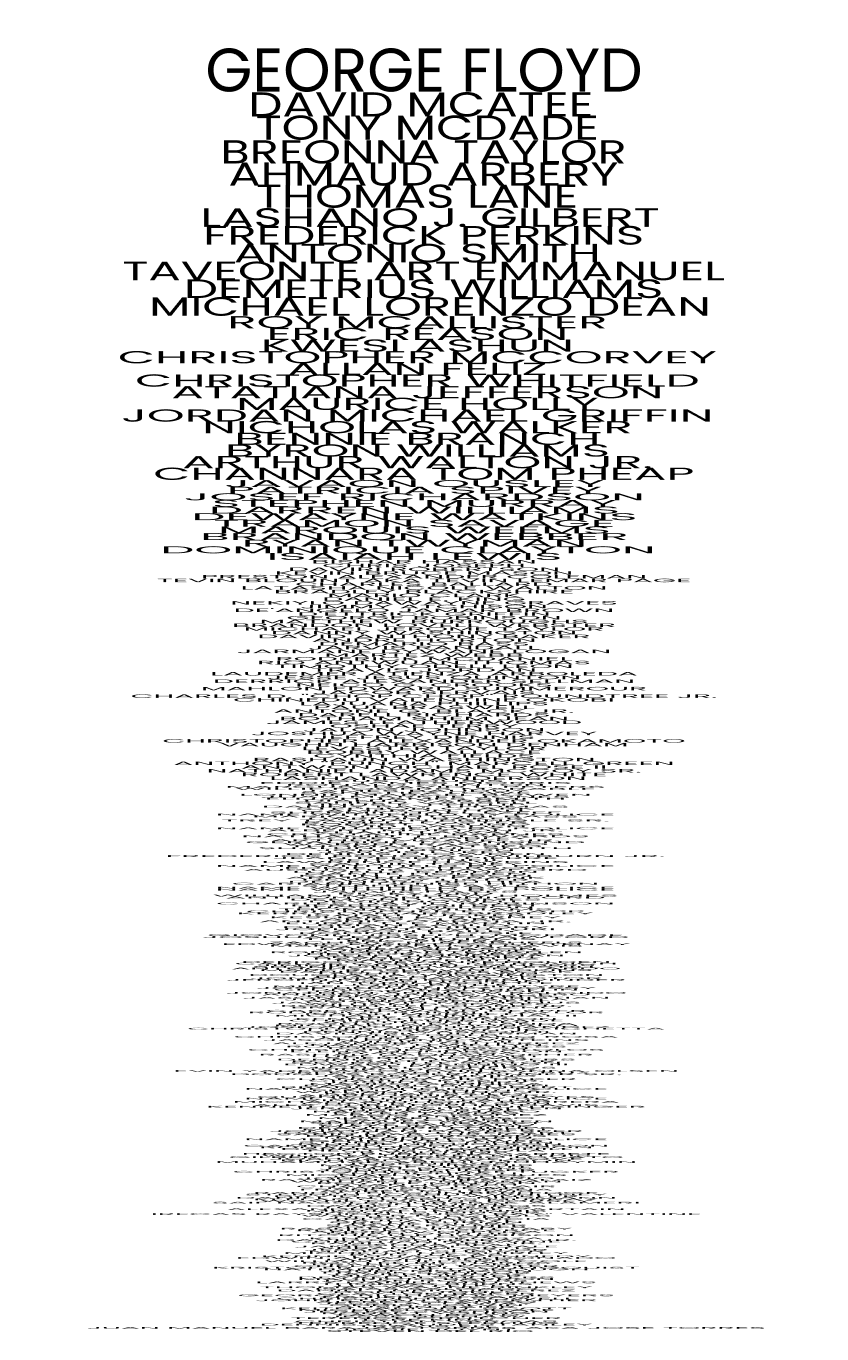
Data points are People. 
How many Black people must die before we see policy changes? 
How many more statistics do we need before we start listening and speak up? 

 
We support and say Black Lives Matter because we have seen time and time again that white lives are perceived and treated as if they matter more, both at the national level and in the largely white state of Connecticut. We cannot acknowledge the centuries of trauma and suffering endured without acknowledging the privileges we hold as a white-led organization. We are committed to critically exploring the impact of our role, identifying ways we can improve, and leveraging these privileges to implement meaningful action.

A core part of our mission at CTData is ensuring everyone has access to data, the ability to use data, and empowering people to use data to achieve racial equity. We need to be intentional that we live this mission and ensure no one is excluded. As an organization that promotes the use of data to inform decision-making, we are recommitting ourselves to not only highlight racial inequities in the data but to support the actions needed to shift the power dynamic.  
 
We recognize that this is not something that can be changed overnight. Racism is an ongoing, systemic, institutionalized problem that requires intentional and continued action to address. It is not enough to say that we stand against racism—we as people and as an organization must align our actions in accordance with these values. Our new journey is only beginning, and we invite your input to collectively shape the path to equity.

In solidarity,
Michelle Riordan-Nold
Executive Director
Connecticut Data Collaborative

Share the Post:

Related Posts

Differential Privacy: What Connecticut Data Users Should Watch

If you use the American Community Survey (ACS) to write a grant, report to a funder or your stakeholders, or conduct planning, there are changes coming that may impact the availability of the data you have grown accustomed to accessing. According to a June 4 rule published by the Office of Privacy and Open Government at the Commerce Department, key statistical products from the Department will be returning to out-of-date statistical methods to protect privacy, which is likely to result in much less data being available for the public to utilize.

As a data user in Connecticut, here’s what we know and what you can look out for with upcoming data releases.

Read More

Connecticut’s Population Continued to Grow from 2024 to 2025, Despite Decreased Net International Migration and High Domestic Out-Migration from Western CT

In March, the Census Bureau released its Vintage 2025 County Population Estimates – which, in Connecticut, are for our nine “county-equivalent” planning regions. The data include annual total population estimates for states and counties or county-equivalents for July 1, 2020, to July 1, 2025, as well as estimated “components of change” – births, deaths, and migration – between each year.

Read on to learn about how Connecticut’s population has changed, overall and by planning region.

Read More

Contact us

Ask a data question

We operate a Data Helpline so you can ask us questions about data and we can help you find an answer. We often field questions such as:
  • I am looking for poverty data for Hartford and surrounding towns for 2019 and 2020.

  • How has remote working in Connecticut changed since the pandemic?

  • I am working on a grant for X, where is the best place to find data about A, B, and C?

If you have a request that would take more than an hour for us to answer, we offer contracted work.

SOLD OUT! CTData Conference 2026 | Dec. 3 | Hartford