
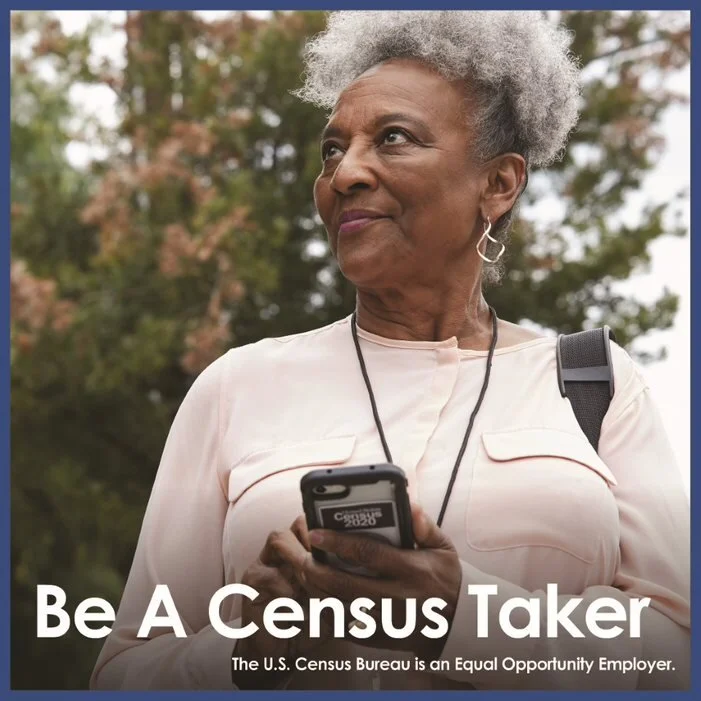
Did you know that Connecticut receives $10.7 billion from the federal government each year based on the decennial census count?
Did you also know that the decennial census is how electoral college votes are distributed, federal House of Representative seats are distributed, and even how state House Representative seats are distributed?
Yet the U.S. Census Bureau projects a 55% self-response rate in 2020, compared to a 74% actual self-response rate in 2010.
That’s a 25% decrease in expected self-response rate.
Which is why the recruitment and hiring of census enumerators is so important.
Census enumerators are the people who go door-to-door and help people fill out their census forms.
A 55% response rate means we’re going to need enumerators to go to 45% of the households in Connecticut to help them get counted.
We’re going to need plenty of enumerators to attain a complete count in Connecticut.
These enumerators will help us ensure that Connecticut will be able to access the federal money the state is entitled to. From highway planning and construction to the school lunch program, this funding is widely diverse. It also impacts Section 8 housing funding, federal student loans, and Pell Grants. But the list doesn’t end there.
Census data also shapes how many seats are appointed to Connecticut in the House of Representatives, which ensure the needs of our communities are heard.
Connecticut needs to recruit a total of 28,000 applicants for census enumerator jobs to fill the 23,000 positions they are hiring for. But what can you do?
First, we must continue to spread the word about these jobs. You can keep an eye on our Census 2020 Events page for job fairs.
Second, and perhaps most impactful, if you work for a nonprofit or community-based organization, you can host a job fair.
Contact the New York Regional Office of the U.S. Census Bureau to connect with someone who can help you. (Be sure to email us with the information so we can post it to the events page)
The U.S. Census Bureau created a map that visualizes the progress toward the 2020 Census Recruiting Goals, so you can see how your area is faring as far as recruitment goes, and which you can interact with below. By selecting “Connecticut” you can see the current week’s progress toward the goal of hiring over 23,000 census enumerators in Connecticut.
This week’s progress shows both Tolland and Windham counties fall just below the 60% mark, and enumerators receive $21 per hour in both counties. If you know folks in these regions who are looking for work, please share the 2020 Census Jobs information with them. Keep in mind that Tolland and Windham counties need many more applicants.