
To celebrate two years of helping organizations across Connecticut strengthen their data work, CTData Collaborative’s Data Strategic Planning (DSP) program hosted a gathering of nonprofit organizations and government agencies that have completed the Data Strategic Planning initiative.
Professionals working in social services, public health, legal aid, education, public libraries, housing, museums, historic preservation, and more came together at the beautiful Mercy by the Sea retreat center in Madison. They gathered to share what they have learned and how their organizations have grown through data work.
The event had two parts. First, over 50 attendees heard directly from DSP alumni organizations who shared how data work is so much more than data collection. For them, data work became the entryway to increased organizational learning, deeper community connections, and stronger decision making.
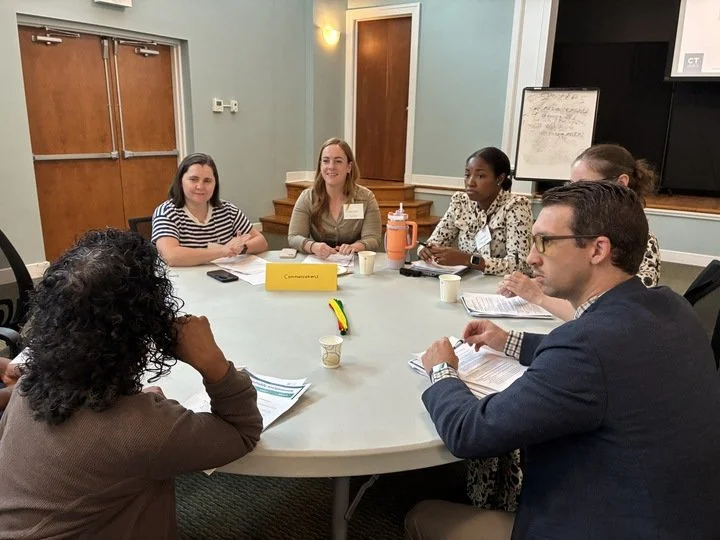
Second, everyone took part in lively roundtable conversations on topics like building a learning culture, managing data without a dedicated data team, improving internal and external communications, and making smart investments in data practices. Each roundtable was led by an expert who provided practical insights and real solutions.
Throughout the day, one message came through loud and clear: “data work is knowledge work.” And knowledge work strengthens every part of an organization. For DSP alumni, working with data sparked growth, improved teamwork, and sharpened their focus on their mission.
The Hockanum Valley Community Council shared how a simple survey became a turning point. They learned more from their clients in one survey than they had in the previous ten years. That insight transformed their leadership. Meetings meetings became richer, more focused, and filled with thoughtful solutions because leaders now had meaningful, accessible data available.
The Children and Family Agency of Southeastern Connecticut spoke about how new data systems improved communication with families, staff, and community partners. Their data work helped strengthen staff support, improve curriculum planning, and streamline daily operations.
Sustainable CT emphasized that improved data management boosted their online engagement, which is essential for raising awareness and inspiring people to act on sustainability.
Auerfarm, a 4-H education center and working farm, described their data journey as transformational. They set clear goals, streamlined volunteer onboarding, improved registration for field trips and events, created new feedback tools, improved their data quality, developed data sharing agreements, and built thoughtful review processes to track their progress.
The State Historic Preservation Office shared how they now visualize the statewide impact of their grant programs, gather better feedback from their educational efforts, and align their data with the state’s conservation goals.
The Center for Housing Equity and Opportunity highlighted how focusing on desired outcomes allowed them to develop a sharper, more actionable strategy for addressing housing challenges in eastern Connecticut.
Throughout the event, participants connected over shared challenges and had the chance to dive deeper into topics with expert facilitators from CTData, the Hartford Foundation for Public Giving, The Connecticut Project, and Trinity College. Roundtable discussions covered everything from effective data visualizations and measuring mission impact, to using maps to tell powerful stories and helping staff see the value of data in their daily work.
One attendee shared, “The expert roundtables were incredibly helpful. They made complex ideas feel achievable and offered real steps we can take back to our organizations.”
The gathering also created valuable opportunities for networking. Participants shared lunch together and connected with each other and funders like the Hartford Foundation and The Connecticut Project, and other partners who share their commitment to learning and improving.
What we saw at this event is that data work is not just about numbers. It is about unlocking knowledge that makes organizations more connected, more effective, and more impactful. And thanks to the DSP community, Connecticut’s nonprofits are showing what is possible when data becomes a tool for growth
This celebration of two years of success demonstrates that when organizations embrace data as knowledge work, they unlock their potential for greater impact in their communities.
For More Information
To learn more about Data Strategic Planning and the ways our coaching can help your organization, fill out this form to schedule a meeting with us. Click here to explore the resources we provide, or sign up to receive information about workshops, data releases, blog posts and more in our newsletter. For training and tips on how to use data, register for one of our CTData Academy workshops or browse our blog. Stay up-to-date with us by following us on Linkedin, Instagram, and Bluesky.