
Our 2023 Harford Youth Data Fellows stressed the importance of understanding the impact of poverty on their families and communities and how it shapes their lives. Together with the Hartford Data Collaborative, two of the Hartford Youth Data Fellows studied data from the U.S. American Community Survey to review publicly available data about children and youth in Hartford. They found that the percentage of children and youth under 18 living below the poverty line remains significant— 37 percent in recent estimates.
Hartford Children and Their Family Structure
Syree Little, 2023 Hartford Youth Data Fellow, reviewed American Community Survey estimates about families in poverty in Hartford.
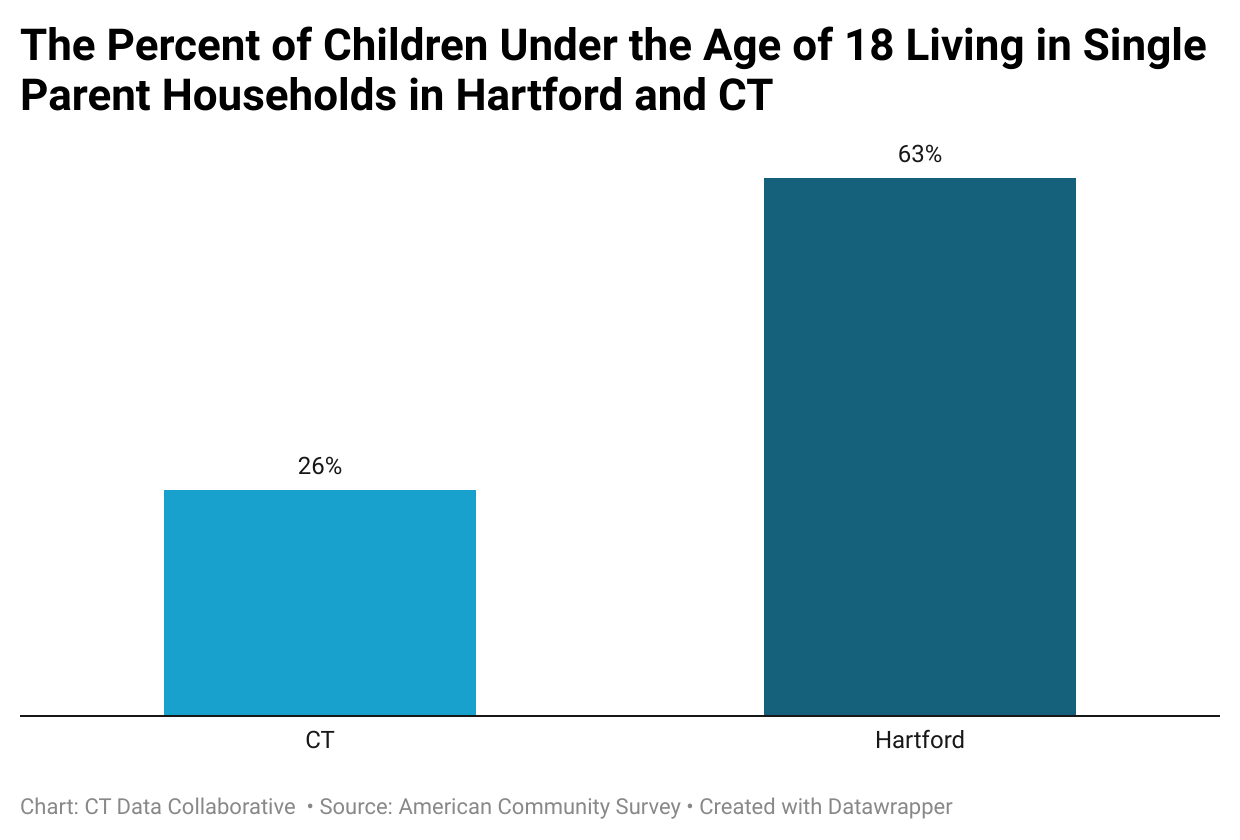
She found that the majority of families in Hartford are headed by single parents, who may face additional challenges in providing resources and financial support for their children. According to recent Census data, 63% of Hartford households with children under 18 years old were headed by single parents. By contrast, about 26% of households with children in CT were single parent households. One parent present is specifically referred to as “Single Parent Family” and includes parents who have never been married and those who have been widowed or gone through a divorce.
How Hartford Children Living in Poverty Varies by Neighborhood
Khamari Thornton, 2023 Hartford Youth Data Fellow, analyzed data about children living in poverty by Hartford neighborhood.
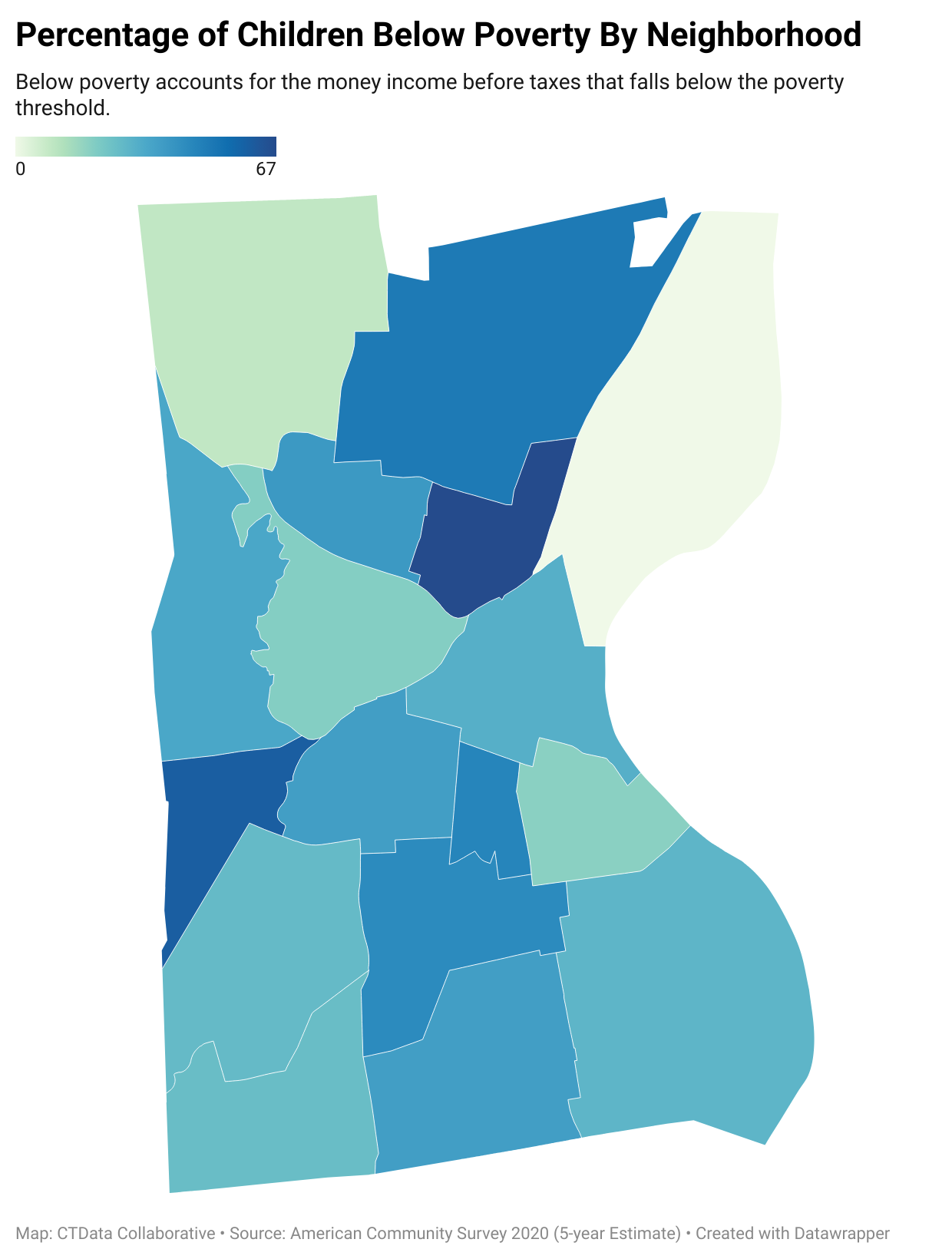
He wrote that Hartford neighborhoods have varying percentages of children who live in poverty. Blue Hills stands at about 9%, and Clay Arsenal at 67%, the highest and lowest percentages, respectively
For More Information
Hartford Youth Data Fellows create community-based data projects through a paid fellowship with the Hartford Data Collaborative. To read more about their work and see the full data projects, click here. If you are interested in learning more about Hartford Data Collaborative, click here. Join us for 2024 Hartford Youth Data Walk to learn about local issues that affect you and your community! To review more Hartford data projects by CTData, click here. You can keep up with us by subscribing to the CTData newsletter and following us on Twitter, Facebook, and LinkedIn.