
Significant shortage in available rental subsidies in Connecticut.
Connecticut is home to a well-documented housing crisis. Research has shown that our state’s housing crisis can drive away business, increase homelessness, and is a top concern for Connecticut’s voters. The crisis is caused by two phenomena. First, Connecticut has a limited supply of available housing, and second, the cost of available housing is high when compared to average household incomes in Connecticut, which makes housing unaffordable.
Federal and state government works to remedy the housing cost and wage gap through a variety of different subsidy programs. This may include subsidizing development of the unit, the lending product used to purchase the unit, or subsidizing the monthly rental cost to the tenant. There are several different subsidy programs available that provide different parameters, incentives, or opportunities, to developers, homebuyers, and tenants.
For tenants, rental subsidy programs are supported by municipal public housing authorities, Connecticut’s Department of Housing, and the United States Department of Housing and Urban Development. The simplest way to think about subsidies that support renters is there are subsidies that permit the tenant to use the subsidy at a unit of their choice (within the parameters of the subsidy type), and subsidies that are connected to specific units of housing.
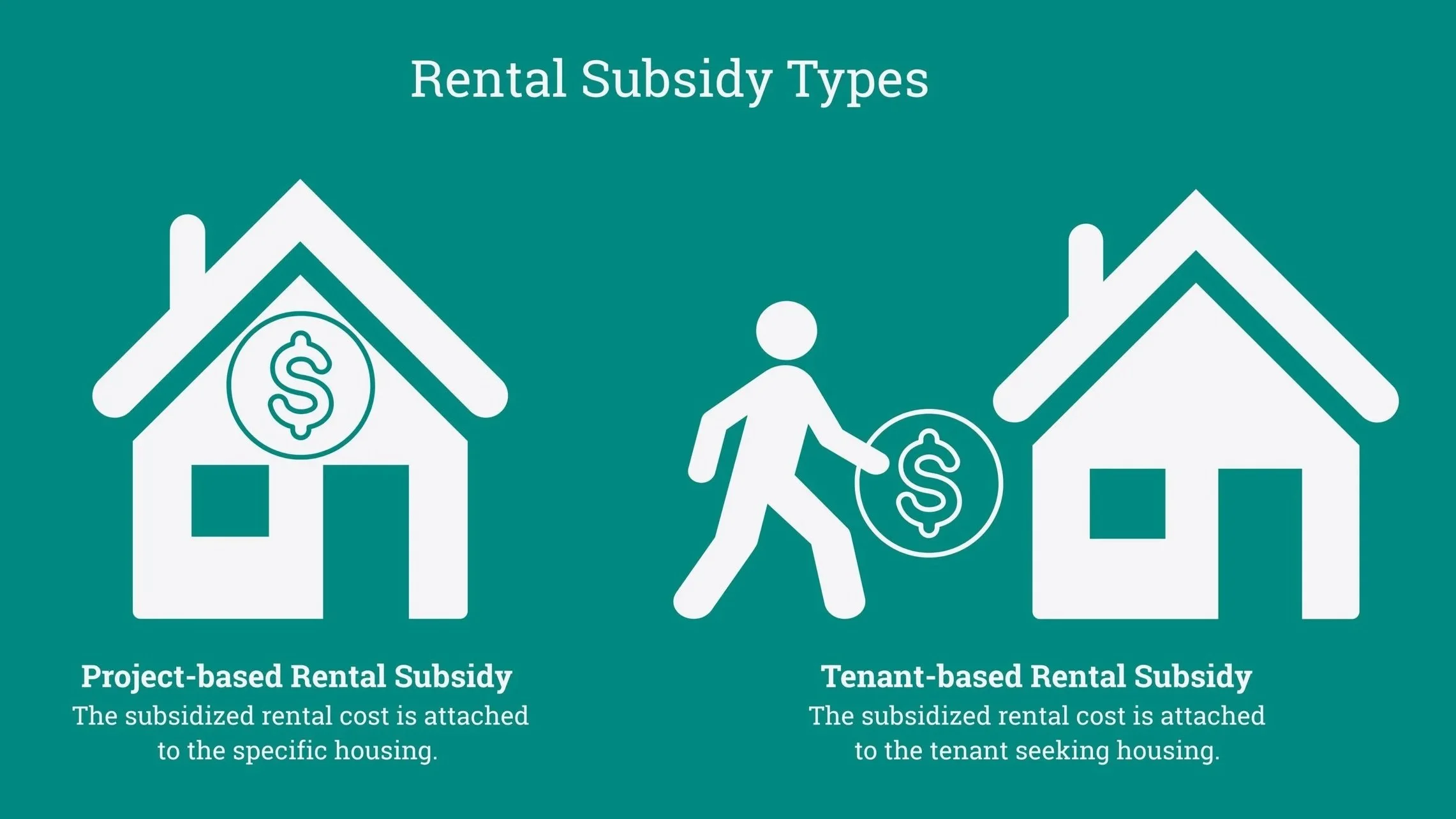
Types of Rental Subsidies
Housing experts explain these two types of tenant subsidies as “tenant-based” meaning the subsidy stays with the tenant to use on the housing of their choice, and “project based” meaning the subsidy is connected to the unit of housing, so if the tenant leaves, they do not take the subsidy with them.
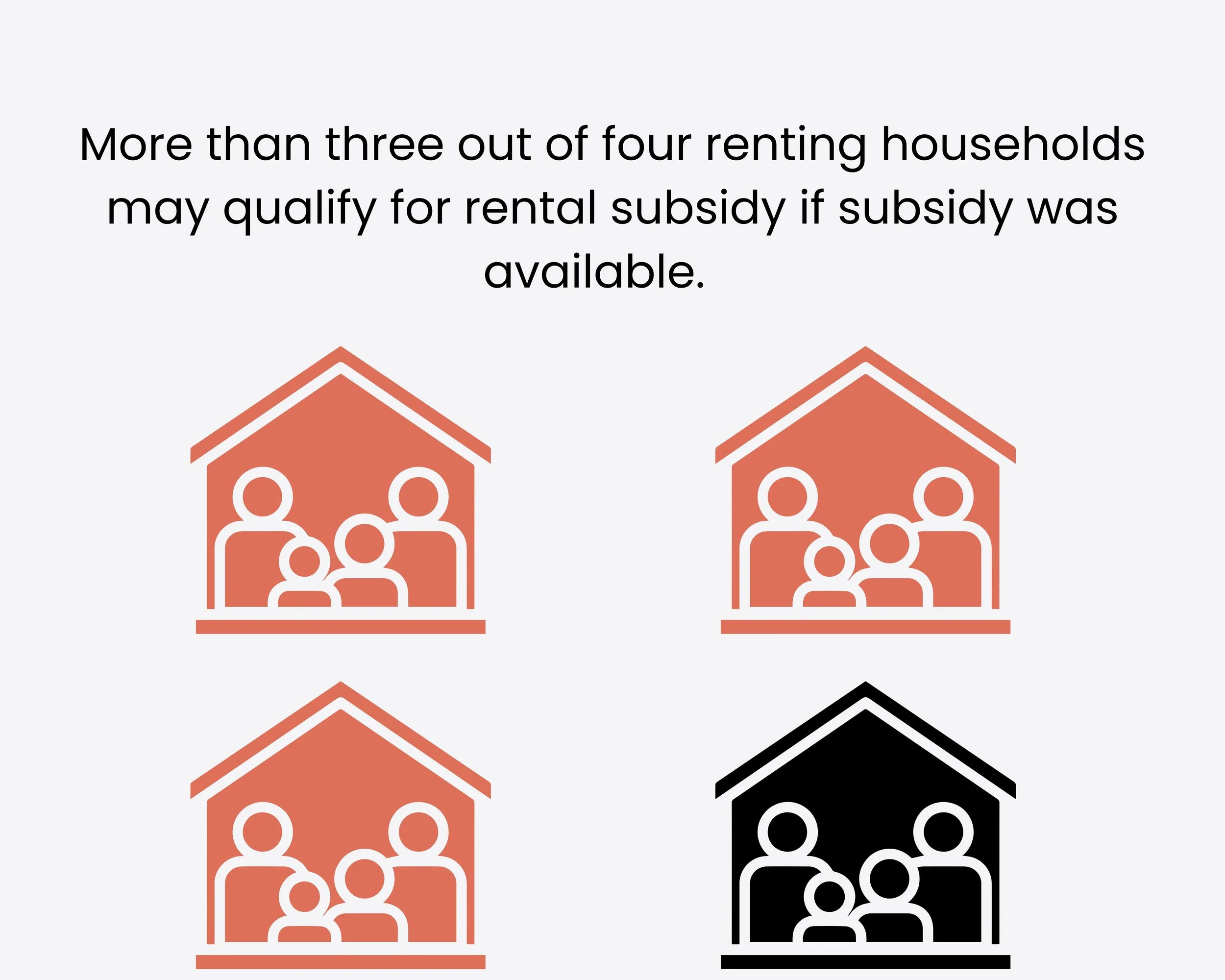
In Connecticut there are 480,258 households who rent their homes. Based on household income, as many as 367,252 households may qualify for a rental subsidy. Meaning more than 75% of rental households may qualify for a rental subsidy if there was enough subsidy available.
Although currently available rental subsidies do not meet this need. Only 119,646 renting households use a subsidy to help pay their rent or have a subsidy connected to their unit. This means that only 1 in 3 renting households who would likely qualify for a rental subsidy actually receive a rental subsidy. Creating an unmet need for over 247,000 households in Connecticut.
The underserved estimate accounts for households who live in a home supported by multiple project-based subsidies and households who use a tenant-based subsidy in a home made affordable through project-based subsidies.
Connecticut is a state rich in organizations, coalitions, agencies, and regional planners working in housing. At CTData our mission is to connect data and people for good. If you would like to see some of our additional housing-related data work please visit here. If you have a housing data question, please contact our team at info@ctdata.org.
If you have any questions about this work, please contact Fionnuala Darby-Hudgens, at fdh@ctdata.org. Data analysis was supported by Keely Jones Stater, CTData’s Evaluation Specialist.
For More Information
For more analysis related to housing, including the Partnership for Strong Communities Housing Profiles, the Evictions Map, and many other housing resources, explore our Housing Data by Topic page. Access data sets and analysis at data by topic and data projects, explore the resources we provide, or sign up to receive information about workshops, data releases, blog posts and more in our newsletter. For training and tips on how to use data, register for one of our CTData Academy workshops or browse our blog. And be sure to connect on Facebook, LinkedIn, Instagram, and Bluesky.